
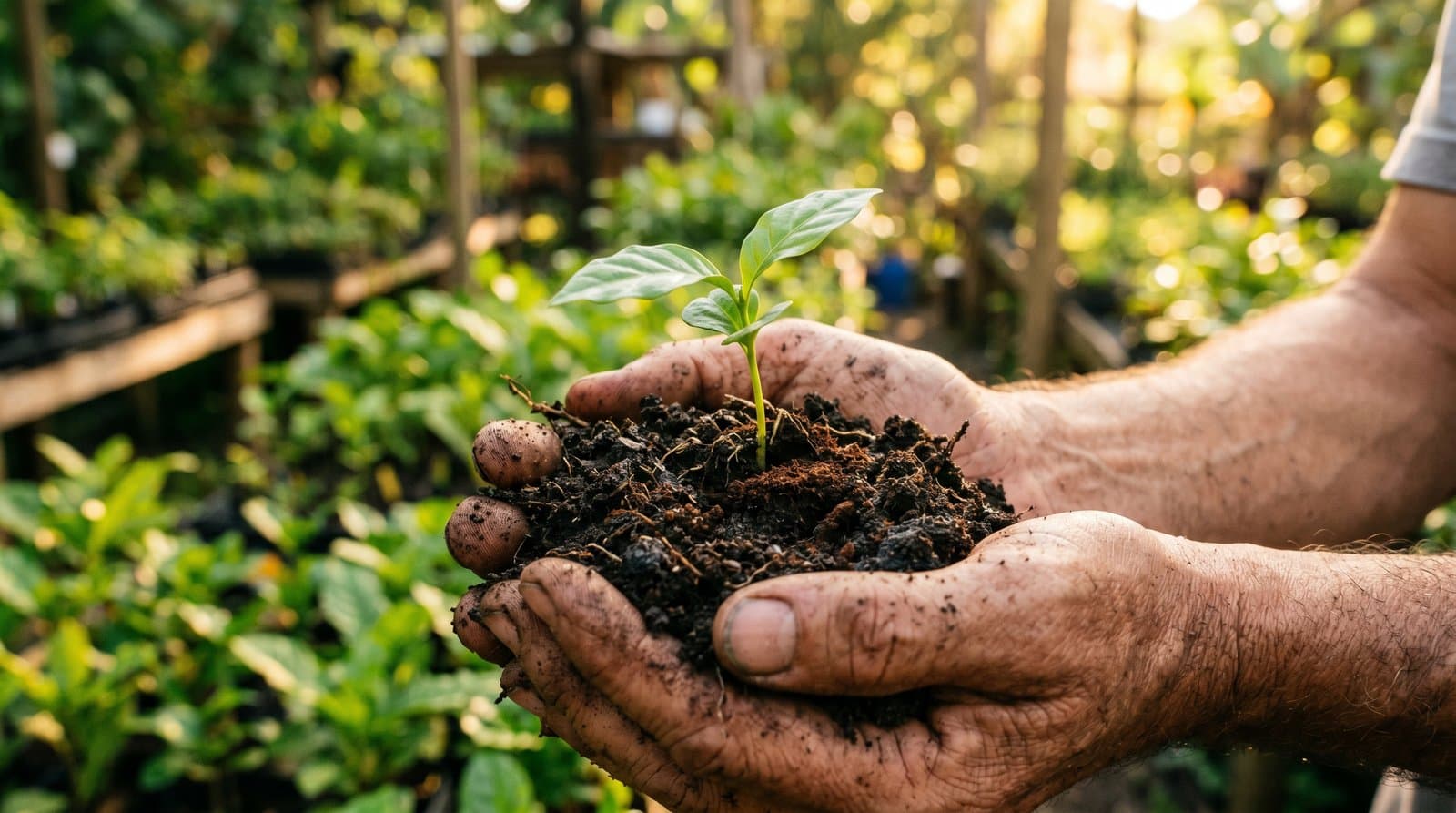
Coffee grounds are one of the most underused inputs in horticulture. They come out of the brewing process already broken down, slightly acidic, and loaded with the carbon and nitrogen that soil life runs on. Composted the right way, they turn into a growing medium that does far more than fill a pot.
A home for beneficial microbes
A healthy soil is a living one. The composted grounds in every Mayer blend give beneficial bacteria and fungi something to eat, and a steady population of those microbes is what keeps nutrients cycling and roots protected. The result is consistent: an array of beneficial microbes in every batch.
Acidic pH, the way most plants like it
Most nursery crops and turf prefer soil that sits a little below neutral. Coffee compost lands in that range on its own, so growers spend less time chasing pH and more time growing.
Trace minerals plants can actually use
Coffee carries a deep range of trace minerals, and its natural compounds help plants take those minerals up rather than letting them lock away in the soil. Iron, zinc, and manganese all move more freely in a coffee-rich mix.
That is why we start with coffee, every time. It is the difference between soil that feeds a plant once and soil that keeps feeding it.